Planning a Whole-House Repipe Without Losing the Details
How to document system failures, compare pipe materials and layouts, and define access, testing, and restoration before a repipe.
Reviewed Oct 2, 2026
On this page
A repipe is a system decision
One leak does not automatically justify replacing every supply line. A pattern of failures, widespread corrosion, poor flow, known problematic material, or an inaccessible layout may support a larger project. The first task is to document the condition and limits of the existing system.
Ask for an inventory: visible pipe materials, recurring failure locations, service entry, branch layout, valves, pressure, and any sections already replaced. Separate the public or private service line from the plumbing inside the house; they are not automatically the same project.
Define what “whole house” includes
Repipe proposals can use the same phrase while covering different work. The written scope should name:
- hot and cold distribution lines;
- main shutoff and branch valves;
- fixture connections and appliance supplies;
- exterior faucets;
- recirculation lines, if present;
- patching and finish restoration;
- permits, inspection, pressure testing, and cleanup; and
- excluded service, drain, gas, or specialty piping.
Without that list, bids are difficult to compare.
Material is only one design choice
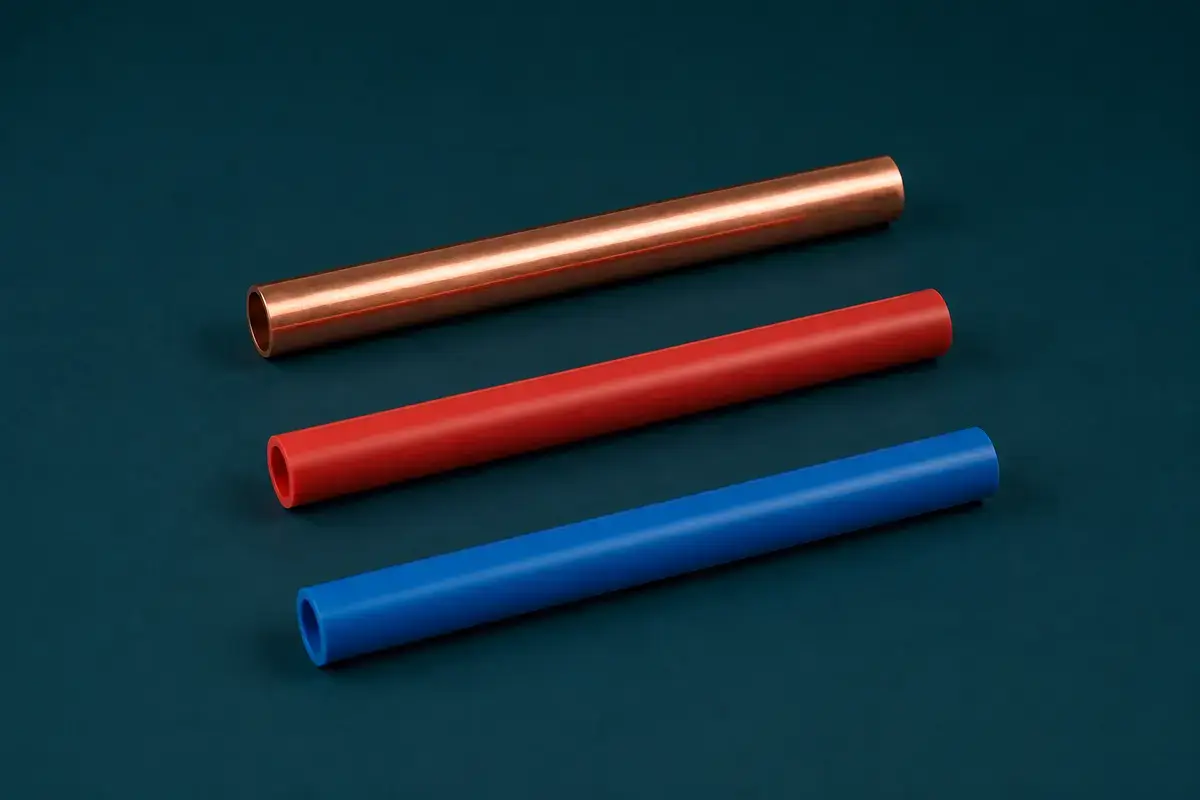
Copper and PEX are common supply materials, but product selection should follow code, water conditions, installation environment, and the contractor’s approved methods. PEX systems also vary by tubing type, fitting system, and layout. Copper performance depends on material, joining, water chemistry, workmanship, and operating conditions.
Ask for the exact product standard and warranty rather than a generic material promise. ASTM F876 is a key specification for PEX tubing. Product approval does not guarantee a good layout or installation.
Layout changes performance and serviceability
A trunk-and-branch design and a manifold or home-run design use different amounts of material and create different access, balancing, and shutoff options. Pipe sizing, run length, hot-water wait time, insulation, pressure, and simultaneous demand all matter.
The best route may pass through a basement or crawlspace, use carefully planned wall openings, or require ceiling access. Ask the contractor to mark likely access points before work begins and to identify any room where cabinets, tile, or built-ins may limit the route.
Compare bids on the same questions
- What evidence supports replacement rather than another repair?
- Exactly which lines and valves are included?
- What material, fitting system, and layout are proposed?
- How will pressure, flow, and hot-water delivery be checked?
- Who opens and restores walls and ceilings?
- How long will water be unavailable?
- What permits, inspections, and warranties apply?
Allowances for concealed conditions should be explicit. A proposal can explain how discoveries such as inaccessible chases, deteriorated valves, or abandoned piping will be handled without using them as a blank check.
Lead and the service line
Replacing interior plumbing does not by itself replace a lead service line. If lead is a concern, identify the material on both sides of the property boundary and consult the water supplier’s current inventory or replacement guidance. EPA guidance treats lead-service-line replacement as a distinct planning and coordination issue.
During and after the project
Protect belongings near access areas and agree on daily cleanup and water-restoration expectations. Before walls close, inspect accessible supports, penetrations, valves, and insulation. Request permit closeout, test results, product information, photographs of concealed work, and a labeled shutoff plan.
Do not drink from or use newly altered piping contrary to the contractor or utility’s flushing instructions.
Philadelphia checks
Repiping inside the house does not replace a lead service line. PWD's lead page explains how to check the service line material for an address.
Plumbing permits in Philadelphia are issued by the Department of Licenses and Inspections (L&I) under the Philadelphia Plumbing Code, and permitted plumbing work is done by a Philadelphia-licensed master plumber. Pennsylvania home-improvement (HIC) registration is not a plumbing license. Ask who will pull the permit and confirm the license before work starts. This directory does not endorse a listed business.
Sources
- F876 Standard Specification for PEX Tubing, ASTM International
- FAQs About PEX, Plastic Pipe and Fittings Association
- Lead Service Lines, U.S. Environmental Protection Agency
- Planning and Conducting Lead Service Line Replacement, U.S. Environmental Protection Agency
- Apply for a Uniform Construction Code Building Permit, Commonwealth of Pennsylvania
- Contractor Licensing, Pennsylvania Department of Labor & Industry
- Pennsylvania Uniform Construction Code, Penn State PHRC
- Review of Copper Pitting Corrosion and Pinhole Leaks, AWWA Water Science
- PEX vs. Copper Pipes, This Old House
- Lead Plumbing & Water Quality, Philadelphia Water Department
- PB_022 FAQ — Summary of 2018 Philadelphia Plumbing Code Amendments, Philadelphia Department of Licenses and Inspections