Got a PWD Notice of Defect? What It Means and What to Do This Week
You get home and find a slip of paper wedged in your door. It is from the Philadelphia Water Department. Something about a "Notice of Defect" and an exterior pipe. It tells you to call a number. It does not tell you much else.
Verified Oct 2, 2026 6 min read 6 sources
On this page
If this describes your week, you are not alone — and you are not without options. Here is what that notice actually means, what the City expects from you, and how to handle the repair without going broke.
What the Notice Is Telling You
A Notice of Defect (NOD) means a PWD crew chief or inspector was at your property, spotted a problem with your exterior plumbing, and documented it. The City leaves a copy at your door the same day and mails a second copy within approximately 20 days.
The issue is somewhere between your house and the City water main or sewer line in the street. In Philadelphia, you own that pipe. That includes the section running under your sidewalk and even under the roadway, all the way to where it connects to the public sewer.
Common problems that trigger an NOD include a leaking water service pipe, a cracked or blocked sewer lateral, or a faulty curb trap — the J-shaped pipe that connects your drain to the lateral.
What the City Is Actually Asking You To Do
The notice states a repair deadline that the inspector sets for your specific defect. Philadelphia does not impose a single fixed citywide deadline the way some jurisdictions do. The property owner is responsible for hiring a licensed plumber and completing the repair within that window.
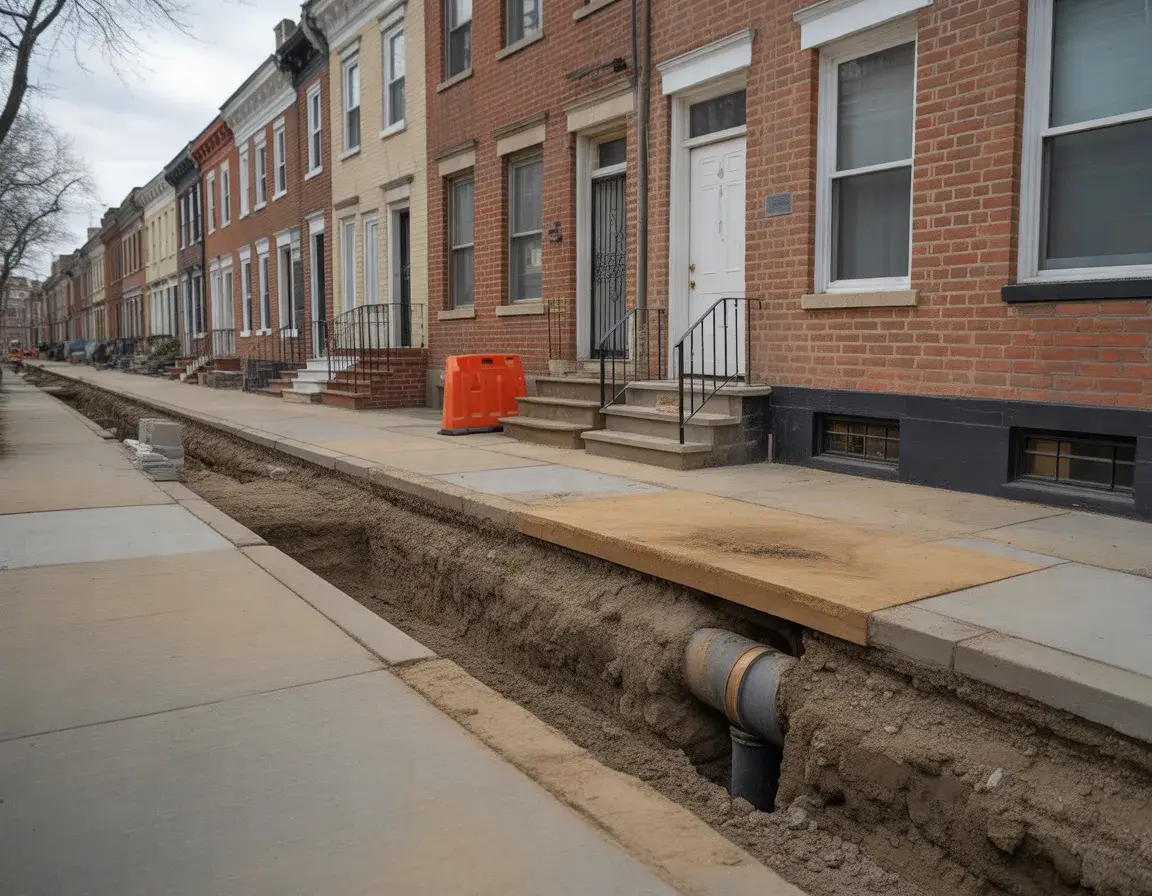
If you do not act, the City can escalate. The Sewer Connection and Repair Manual is clear: failure to repair can result in a Notice of Violation, a suspension of your water service, and eventually the City stepping in to correct the problem — and billing you for the full cost.
That is not a bluff. Under the Philadelphia Administrative Code, the City has the authority to shut off water to prevent an immediate hazard to health or property, and to take additional enforcement measures — including placing a lien on your property for unpaid repair costs — if the bill is not paid.
Can You Afford This Right Now?
Most homeowners' and renters' insurance policies do not cover exterior plumbing defects. That surprises a lot of people. The good news is the City created a program specifically for this situation.
The Homeowner Emergency Loan Program (HELP) offers zero-interest loans for water service line and sewer lateral repairs. Here is how it works:
- Repayment term: 60 months (five years), interest-free — unless you miss a payment.
- Income-based relief: Low-income customers may qualify for longer installment periods.
- How to qualify: You must either have received an NOD from PWD, want to replace a confirmed lead water service line, or have a private sewer connection that needs repairs (reversing drainage to reach a public sewer). The property must be residential (up to four units). You (the owner) must be the applicant; tenant-occupied properties are eligible with the owner applying. You cannot be delinquent on your water bill for more than two billing cycles.
- The catch: PWD places a lien on your property for the total cost of the work. Like most property liens, it must typically be satisfied at sale or refinance.
To apply:
- Online: phila.gov/water/HELPLoan
- Phone: (215) 685-4901
- In person / mail: HELP Loan, Philadelphia Water Department, 1101 Market Street, 6th floor, Philadelphia, PA 19107
PWD will contact you within two business days of receiving your pre-application to schedule an inspection and provide a cost estimate.
Do You Have To Use HELP?
No. You can hire any licensed plumber on your own and pay out of pocket. If you go this route, you still need to follow City requirements:
- Pull a Sewer Connection Permit from L&I before any non-emergency work begins.
- Hire a Master Plumber. The Philadelphia Plumbing Code requires permit applications to be submitted by a Master Plumber or their authorized agent.
- Schedule a PWD inspection at least 48 hours before excavation. The Plumber calls PWD's Water Transport Records Unit at 267-455-4460 to schedule. The inspector will verify the work meets code, and inspections run from the start of the connection or repair through the first foot of backfill over the City sewer.
- Use a licensed plumber. You can find licensed contractors at phila.gov/li under "Find a licensed contractor and contractor information."
The Permit and Inspection Process in Brief
If you are doing this without HELP, here is the sequence:
- A licensed Master Plumber applies for a Sewer Connection Permit through L&I.
- For new connections (not repairs to an existing lateral), a Utility Plan Review may be required before the permit is issued.
- At least 48 hours before excavation, the plumber calls PWD at 267-455-4460 to schedule the required inspection.
- The plumber performs the work.
- The PWD inspector reviews the work. If it passes, the job is complete. If it fails, the work must be corrected and re-inspected.
If a job is a true emergency, the Plumber may start work immediately but must obtain the proper permits within three (3) days.
The City can issue a Stop Work Order at any time if work is being done unsafely or in violation of the Philadelphia Code or PWD regulations.
What to Ask a Plumber (and What a Good Answer Sounds Like)
Not all plumbers are set up to handle a PWD Notice of Defect. When you call, here are the questions that separate someone who knows the process from someone who does not:
"Have you worked on PWD defect notices in Philadelphia before?" A plumber who regularly handles lateral repairs in the city should answer yes without hesitation. They should be familiar with the NOD process and L&I permit requirements.
"Do you handle the L&I permit, or do I need to hire a separate plumber for that?" A Master Plumber should be handling the permit application themselves. If they say they do not pull permits for this type of work, that is a red flag.
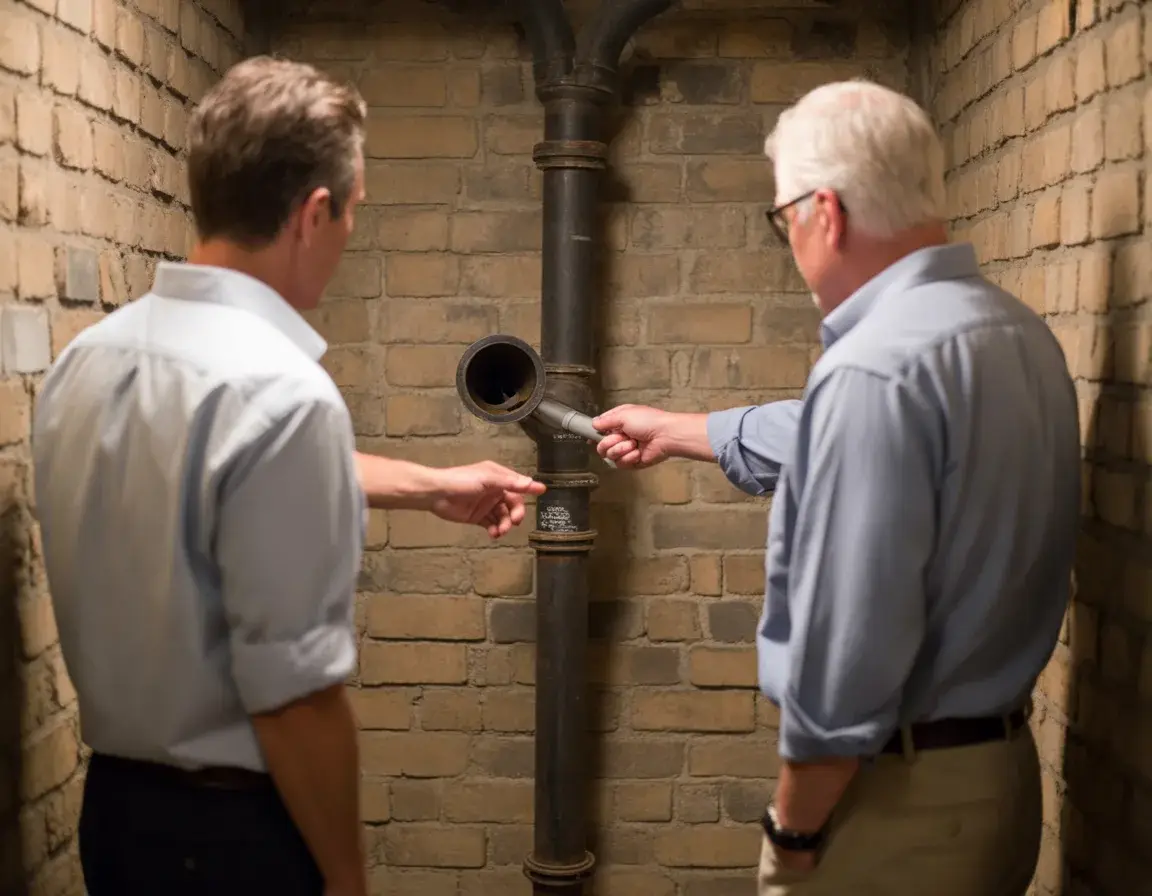
"What exactly is the defect, and can you explain what a lateral and curb trap are?" The lateral is the pipe connecting your house drain to the public sewer. The curb trap is the J-shaped fitting that connects your drain to the lateral. Any plumber working on a PWD notice should be able to explain which component is defective and why.
"How do you schedule the PWD inspection?" A competent plumber knows that at least 48 hours' notice is required before excavation and that PWD must inspect the connection from start through the first foot of backfill.
"Will this work qualify for a HELP loan if I need financing?" A plumber familiar with HELP should at minimum be able to tell you that it is an option and direct you to PWD to confirm eligibility.
"What happens if the inspector fails the work?" A good plumber will explain that they are responsible for correcting the issue and requesting a re-inspection, at no additional cost to you for the correction itself.
What a Competent Plumber Does Not Say
Be wary of any plumber who:
- Cannot explain the difference between a sewer lateral and a water service line
- Does not mention permits or PWD inspections
- Gives you a verbal estimate without a written, itemized quote
- Pressures you to sign a contract on the spot
- Says they do not need to schedule a City inspection
Bottom Line
If you got a PWD Notice of Defect, the clock is already running. Read the notice for the inspector-set repair deadline, call PWD at (215) 685-4901 if you have questions, and explore the HELP loan program if financing is a concern. If you hire a plumber independently, make sure they are a licensed Master Plumber who pulls permits, schedules inspections, and can walk you through exactly what the defect is and how they will fix it.
Sources
- Got a plumbing defect notice? Here's what to do!, City of Philadelphia
- Customer Responsibilities, Philadelphia Water Department
- Sewer Connection and Repair Manual, Philadelphia Water Department
- Got a plumbing defect notice?, City of Philadelphia
- Homeowner's Emergency Loan Program (HELP), City of Philadelphia
- Sewer Connection and Repair Manual, PWD