You own the pipe under the street: where PWD's responsibility actually ends
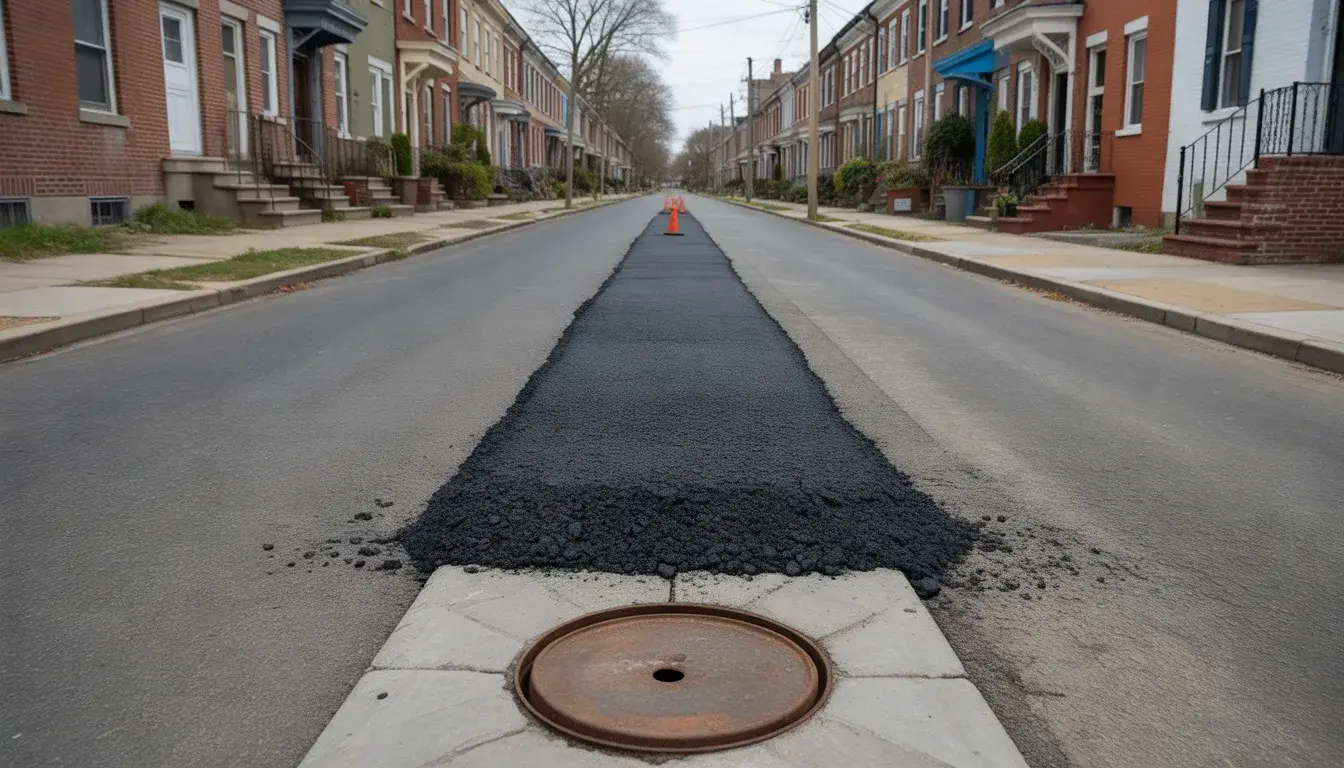
Water poured in the street from a broken pipe in front of your rowhome, the Philadelphia Water Department (PWD) truck right there — and the crew says it's not theirs to fix. That is the rule, in PWD's own words: "Once drinking water leaves the PWD water main in the street, its safe delivery becomes the customer's responsibility." PWD maintains the main. You maintain the pipe that connects your house to it — plus, on the sewer side, everything between your drains and the City sewer, including the pipe under the sidewalk.
Verified Oct 1, 2026 7 min read 6 sources
On this page
- The dividing line: the main is the City's, the connection is yours
- What the law says (the short version)
- Why this matters specifically in Philadelphia
- Triage: whose problem is it?
- The lead service line check every Philly owner should do
- When the repair bill lands: the HELP loan
- What to ask a plumber — and what a competent answer sounds like
- The takeaway
- Sources
This page explains where the line falls, what the law says, what happens when your line fails, and how owners pay for the fix when a Notice of Defect or a confirmed lead service line shows up.
The dividing line: the main is the City's, the connection is yours
PWD's responsibility is the water main in the street, the sewer(s) under it, and the stormwater inlets at the curb. Everything else is the property owner's:
- Ferrule — the connection fitting to the water main (PWD installs it for standard sizes; the piping after it is yours to maintain).
- Water service pipe — pipe from the ferrule toward your property.
- Curb stop and curb stop box — the shutoff for your property, usually near the curb line; you must keep its box and cover accessible.
- Water supply pipe — pipe carrying water from the curb stop into the house.
- Supply valves and meter-adjacent plumbing — valves on either side of the meter, plus weakening pipes or fittings.
- The water meter itself — the nuance most people miss: PWD owns the meter; you protect it. Keep the meter and valves accessible and protected at all times, especially from freezing; if the meter or seals are damaged by theft, vandalism, freezing, tampering, or other damage, you pay for repair or replacement.
On the wastewater side: the main house drain, the curb trap, the vent pipe and vent cover (the "fresh air inlet" plate at the sidewalk), the lateral, and the slant (the tap where your lateral meets the sewer) are all the homeowner's to maintain. PWD regulations are explicit: the "City Sewer System" does not include laterals, which are "owned and maintained by property owners."
What the law says (the short version)
This isn't just a utility billing policy; it traces to the Philadelphia Code and state law:
- Code § 13-502(2): every connection of 2 inches or less must "maintain in good repair at his own expense a service pipe from the City's main into the premises." The plain legal duty behind "you own the pipe."
- Code § 13-503(1): if water leaks or flows unnecessarily from your pipes or service line, PWD "may shut off the supply of water to the property."
- Code § 13-801(1): the "Water and Sewer System" — the thing the City owns — is defined as the mains, sewers, and appurtenances the City owns and maintains. Your service line isn't in that definition.
- PWD Regulations § 401.8(b): if a violation can't be fixed just by shutting your water off, the City can bring the property into compliance "by itself or by employing plumbers" and bill you for the costs.
- Property Maintenance Code PM-505.3 requires the supply system be maintained "free from defects and leaks," and state law (53 P.S. § 14467) requires every dwelling to keep a working water supply "freely at all times."
Customers without fully operational lines are served a Notice of Defect (NOD) and must repair within the period stated on the notice. PWD is blunt about the rest — "PWD is not responsible for your plumbing" and "a licensed plumber must do the work."
Why this matters specifically in Philadelphia
- Old house connections. PWD estimates about 1 in 20 Philadelphia properties may have a lead service line — and Philadelphia has never used lead for its mains; the risk is on the property side of the boundary.
- Shared and legacy connections. Older blocks sometimes share a single ferrule. The Code handles that: if one premises disconnects, the others must install a separate connection (§ 13-504(3)).
- Combined vs. separate sewers. In combined areas sanitary and stormwater flow through one lateral; in separate areas there are distinct sanitary and storm sewers. The owner-maintained components are the same list either way — but your block may differ from the house across the neighborhood.
- Depth rules date back to 1872. The ordinance behind City Code § 13-500 required private pipes to be laid as deep as the public main, from main to stopcock. When a contractor quotes a shallow line that froze, that's why.
Triage: whose problem is it?
The practical question is which side of the curb it's on:
- Main breaks, open hydrants, neighborhood flooding: call PWD's 24/7 hotline, (215) 685-6300. They identify, contain, pinpoint (PA One Call), repair (average 8–12 hours barring complications), flush, and patch. If PWD's main damaged your property, Risk Management claims: (215) 683-1700.
- A leak or break between the curb stop and your house — or inside the home, including frozen service-line pipes: that's your repair, and it needs a licensed plumber. PWD can shut your supply off until it's fixed (§ 13-503(1)).
- After any PWD street repair, sediment can end up in your pipes. PWD's advice: run cold taps for several minutes (bathtub, laundry, or garden-hose-fed first), then clean faucet aerators.
The lead service line check every Philly owner should do
Lead service lines are an owner problem — but Philadelphia gives you good tools:
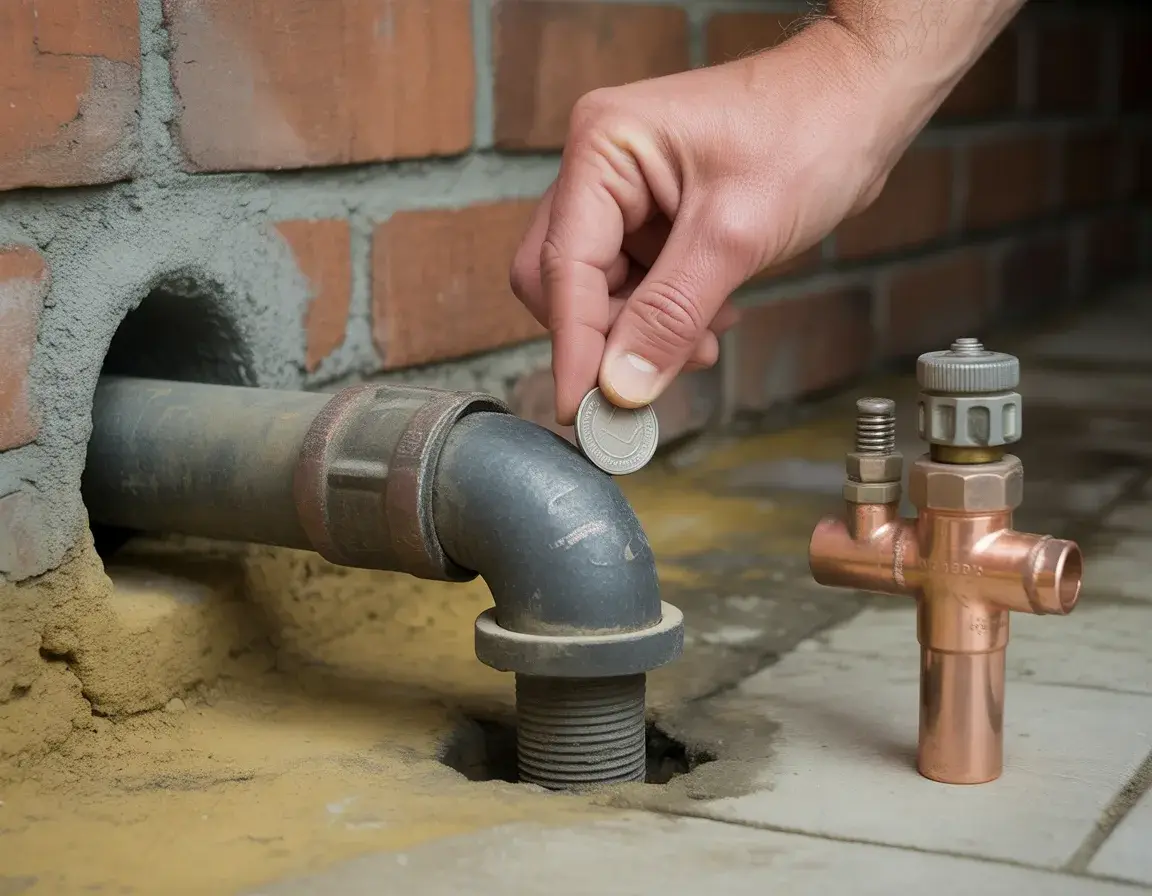
- Look up your address on PWD's Service Line Map (water.phila.gov/service-line), then confirm with PWD's self-inspection guide. Many homes are still "unknown."
- Request PWD's free water quality/lead testing if you're concerned.
- If it's lead, you have three tracks: free full replacement (main to meter) whenever PWD replaces the water main on your block — watch for the advance letter; a zero-interest HELP loan for a confirmed lead line even without an NOD; or any licensed and insured plumber for a private estimate. PWD's line: (215) 683-8825 / [email protected].
- A first-of-its-kind program is in motion: PWD says it plans a Service Line Replacement Program beyond main projects and HELP loans, first pilot in North and West Philadelphia — about 1,000 lead service lines budgeted, planned to begin in 2026. That's PWD's published plan as accessed 2026-09-29; if you're in those areas, confirm current status with PWD.
When the repair bill lands: the HELP loan
For owners who get hit with an NOD — or who confirm a lead line — the Homeowner's Emergency Loan Program (HELP) offers a zero-interest loan repaid over 60 months on your water bill.
Who it's for (verify current terms when you apply):
- Triggers: a confirmed lead service line (map confirms — no NOD needed), a Notice of Defect from PWD, or certain private sewer connection repairs requiring redirection to the public sewer.
- Ownership: you must own the property (tenant-occupied OK).
- Property profile: residential, or primarily residential mixed-use, with no more than four units.
- Standing: payment agreements current, operable meter, no more than two billing cycles delinquent.
- Process: pre-apply at water.phila.gov/helploan or call (215) 685-4901; PWD issues the cost estimate and loan agreement, you schedule repairs after signing.
Fine print: the loan stays interest-free only if you pay on time.
What to ask a plumber — and what a competent answer sounds like
You're hiring for a trench, a permit, and a city inspection. (Directory guidance, not a referral.)
- "Where exactly is my responsibility line — ferrule, curb stop, meter, lateral?" A good answer walks you through the PWD responsibility diagram for your configuration, points to your curb stop box and meter, and notes the meter is PWD-owned but your protection duty.
- "Do you pull the required permits?" A good answer is yes — sewer connections require an L&I permit under Code § 13-601(1); water work likewise goes through City permitting. A wave-off is a walk-away sign.
- "Is my service line lead, galvanized, or copper — and how will you confirm?" A good answer includes a physical check plan (lead can also hide in solder and older brass fittings) plus a cross-check against PWD's Service Line Map.
- "If it's lead, what are my replacement options and costs?" A good answer knows the PWD tracks — free replacement during water main work, HELP loan eligibility for confirmed lead without an NOD, PWD's replacement contact — and prices transparently.
- "Will you have to dig up my sidewalk or curb — and who restores the surface?" A good answer explains excavation scope (owners excavate and fill afterwards under PWD Regs § 306.7(b)), whether restoration is included, and how the curb stop box will be left accessible.
- "My NOD has a deadline. Can you meet it, and what do I submit?" A good answer reads the NOD with you, sequences permit → repair → inspection against the stated period, and mentions HELP pre-application if eligibility might apply.
A plumber who can't distinguish your components from PWD's — or implies the Water Department covers the connection pipe — is telling you something important.
The takeaway
The main under the street is PWD's. From the ferrule inward, it's all yours: service pipe, curb stop and box, supply pipe, meter protection, supply valves, house drain, curb trap, lateral, slant, and vents. The Code puts the duty on you at your own expense (§ 13-502(2)), lets PWD shut off water for leaks (§ 13-503(1)), and can repair-and-bill you for violations (§ 401.8(b)). Check your service line material on PWD's map, call (215) 685-6300 for street-side emergencies, and if an NOD or lead line shows up, start with HELP at (215) 685-4901 before you sign anything.
Sources
- Customer Responsibilities, Philadelphia Water Department — accessed Oct 1, 2026
- From Street to Sink: Water System Responsibility, PWD — accessed Oct 1, 2026
- Water Service and Supply Line Ownership/Maintenance Responsibility Citations, City of Philadelphia — accessed Oct 1, 2026
- Damaged water mains & pipes: water infrastructure emergencies, PWD — accessed Oct 1, 2026
- Lead Plumbing & Water Quality, PWD — accessed Oct 1, 2026
- Homeowner's Emergency Loan Program (HELP), City of Philadelphia — accessed Oct 1, 2026