A Plumbing Emergency Plan for Philadelphia Homes
How to contain an urgent plumbing problem, recognize hazards, and prepare useful information before an emergency plumber arrives.
Reviewed Oct 2, 2026
On this page
Start with the danger, not the repair
An emergency call goes better when the first minute is spent making the home safer. The correct first action depends on what is happening:
- Water is escaping: close the nearest fixture valve or the main water shutoff, if you can reach it without entering standing water.
- Wastewater is backing up: stop using sinks, showers, toilets, washers, and dishwashers. Keep people and pets away from the affected area.
- You smell gas or hear gas escaping: leave immediately. Do not touch switches, phones, appliances, garage-door controls, or anything that could create a spark. Call 911 and the gas utility from outside.
- Water is near electrical equipment: do not step into it. Call emergency services or the utility if power cannot be isolated safely from a dry location.
The goal is containment. Diagnosis and permanent repair come after the immediate hazard is controlled.
Decide what cannot wait
A plumbing problem is urgent when delay is likely to increase property damage, create a sanitation risk, or leave the home without an essential service. An actively spraying pipe, sewage entering living space, a leaking water-heater tank, or a failed sump pump during rising water belongs in that category. A dripping faucet or a slow fixture drain usually can be scheduled unless the condition suddenly worsens.
Before calling, note three facts: where the problem is visible, whether the water is clean or contaminated, and whether shutting a valve changed it. Those observations are more useful than guessing which pipe or appliance failed.
What an emergency visit should accomplish
Emergency work usually has two stages. The first is stabilization: isolate the failed branch, stop a backup, make equipment safe, or restore a minimum level of service. The second is the permanent solution, which may happen during the same visit or after parts, permits, access work, or cleanup are arranged.
A technician may check pressure, trace the affected supply branch, inspect exposed joints, test a fixture, open an accessible cleanout, or use a drain camera after flow is restored. A responsible explanation separates what was observed from what is still uncertain.
Ask for a written description of:
- the condition found;
- the temporary or permanent work performed;
- any part of the system left out of service;
- the recommended next step; and
- responsibility for permits, inspection, restoration, and cleanup.
Make the call more useful
Give the dispatcher a compact account rather than a long theory. State the address, the affected room or equipment, when the condition began, whether water is still flowing, and what has already been shut off. Mention sewage, gas odor, electrical exposure, a medical need, or a home that cannot be occupied.
Useful questions include:
- Is the quoted arrival window an estimate or a guarantee?
- Is there an after-hours or dispatch charge?
- Will the technician be able to perform a permanent repair, or only stabilize the system?
- How will additional work be authorized?
- Is the business registered for applicable home-improvement work in Pennsylvania, and what local plumbing credential applies?
Pennsylvania Home Improvement Contractor registration is a consumer-protection registration, not a statewide plumbing license. Plumbing credential and permit rules can differ by municipality, so homeowners should verify both the contractor's claim and the local requirement.
Prepare before the next failure
Small preparations reduce confusion during a real event:
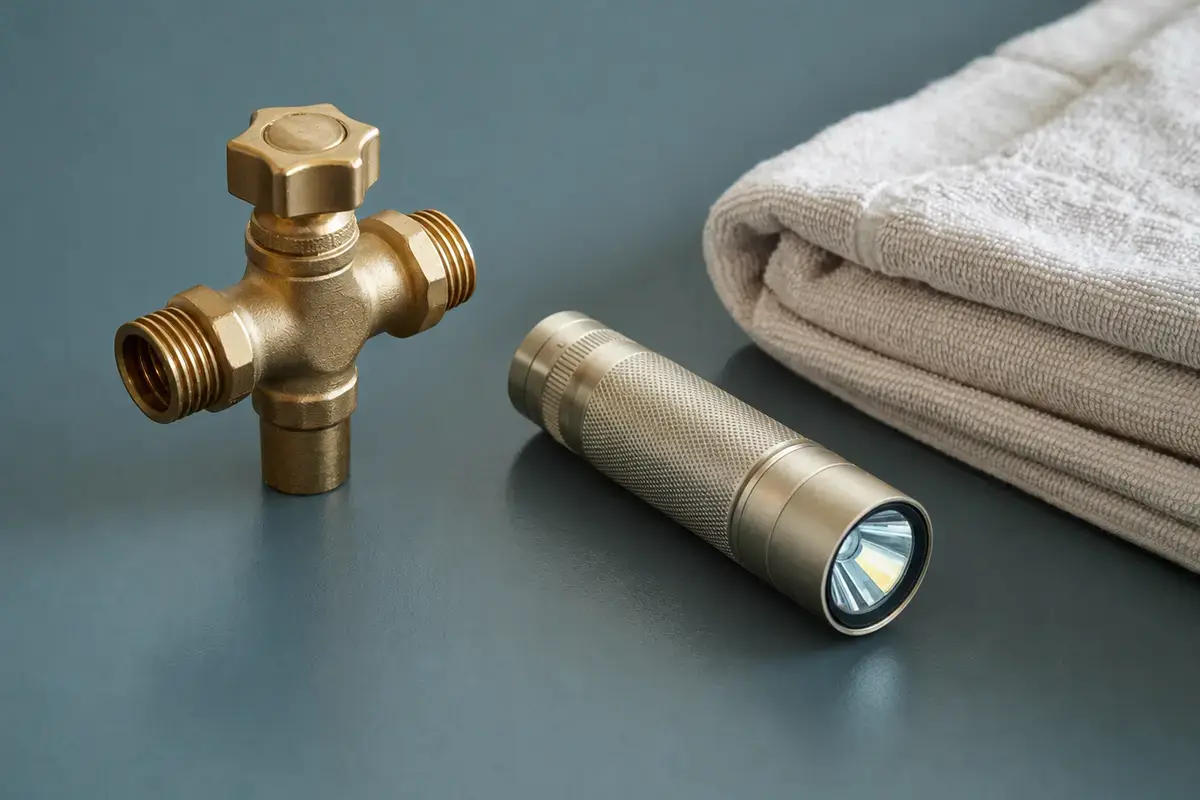
- label the main water shutoff and fixture valves;
- keep the water utility, gas utility, insurer, and a chosen plumber in the household contact list;
- photograph utility shutoffs and the water-heater data plate;
- replace dead flashlight and leak-alarm batteries;
- keep storage away from the sump pit, water heater, and main valve; and
- review freeze protection before cold weather.
Do not test an old, corroded valve for the first time while water is already escaping. If a shutoff is inaccessible, seized, or leaking, schedule service before it becomes an emergency.
Safety limits
Do not cut into walls around energized wiring, attempt gas-piping work, dismantle a hot or pressurized water heater, or use chemical drain cleaner after sewage has backed up. Do not combine drain chemicals, and tell the responding plumber if any product has already been used. Sewage and floodwater may contain pathogens; significant cleanup is separate professional work.
This guide helps with triage. It cannot identify the failed component or determine whether a home is safe to occupy.
Philadelphia checks
For a water main break or water coming up in the street, contact PWD. Problems on the owner's side of the connection need a licensed plumber; this Q&A explains where PWD's responsibility ends. If an urgent repair bill is a hardship, the City's HELP loan program may apply.
Plumbing permits in Philadelphia are issued by the Department of Licenses and Inspections (L&I) under the Philadelphia Plumbing Code, and permitted plumbing work is done by a Philadelphia-licensed master plumber. Pennsylvania home-improvement (HIC) registration is not a plumbing license. Ask who will pull the permit and confirm the license before work starts. This directory does not endorse a listed business.
Sources
- Emergency Water Shut-Off, Regional Water Providers Consortium
- Preventing and Thawing Frozen Pipes, American Red Cross
- Cleaning Safely After a Disaster, Centers for Disease Control and Prevention
- Gas Emergencies, National Grid
- Home Improvement Contractor Registration, Pennsylvania Office of Attorney General
- Uniform Construction Code, Pennsylvania Department of Labor & Industry
- Contractor Licensing, Pennsylvania Department of Labor & Industry
- Frozen Pipes, Protect Your Pipes
- Damaged water mains & pipes: water infrastructure emergencies, Philadelphia Water Department
- Customer Responsibilities, Philadelphia Water Department
- Homeowner's Emergency Loan Program (HELP), City of Philadelphia
- PB_022 FAQ — Summary of 2018 Philadelphia Plumbing Code Amendments, Philadelphia Department of Licenses and Inspections